















Avène Sun Children SPF50+ Resistant Spray 200 ml
- y_2026, m_10, d_7, h_11
- bvseo_bulk, prod_bvrr, vn_bulk_3.0.48
- cp_1, bvpage1
- co_hasreviews, tv_0, tr_38
- loc_en_GB, sid_70267, prod, sort_[SortEntry(order=SUBMISSION_TIME, direction=DESCENDING)]
- clientName_easyparapharmacie
- bvseo_sdk, p_sdk, 3.2.1
- CLOUD, getAggregateRating, 101.36ms
- REVIEWS, PRODUCT

Description
- Enriched with Sunsitive Protection® for optimal UVA/UVB filtration
- Protects children’s delicate skin from sun damage
- Water-, sand- and sweat-resistant for long-lasting protection
- Lightweight spray texture for quick, even application
- Gentle formula tested on sensitive skin from age 3
How to use Avène Solar Children SPF50+ Resistant Spray?
Protecting children’s delicate skin from the sun requires both effective and gentle care. Avène Solar Children SPF50+ Resistant Spray combines very high UVA/UVB protection with a formula specially designed for sensitive skin—even in extreme conditions.
Optimal, gentle protection
This children’s sun spray features Avène’s patented Sunsitive Protection® filtering system, delivering enhanced defence against UVB, long UVA rays and free radicals. Its triple resistance to water, sand and sweat makes it ideal for outdoor activities, while dermatological and paediatric testing ensures excellent tolerance—even for sensitive skin. The lightweight, fragrance-free texture applies effortlessly, leaving no white marks while hydrating the skin’s upper layers.
Eco-responsible and practical
Avène goes further with an eco-conscious approach: the filters, assessed as non-ecotoxic on three key marine species*, are optimised for biodegradability**. The packaging, made from 74% recycled materials, supports waste reduction. A complete solution that balances skin safety, high performance and environmental respect.
This sun protection spray becomes the essential companion for sunny days—offering uncompromising defence for delicate skin.
Our commitments to minimise marine impact: Filters evaluated as non-ecotoxic, tested on three key marine biodiversity species*. Products developed with optimised formulas to enhance biodegradability** and using a limited number of UV filters. Packaging made from recycled, recyclable, bio-sourced or compostable materials, or with reduced plastic content. Here: 74% recycled and predominantly recyclable materials. Communication initiatives to raise awareness about choosing suitable sun protection and following recommended usage guidelines.
Tests conducted by the Banyuls-sur-Mer Oceanological Observatory, a partner of the European Marine Biological Resource Centre (or independent laboratories), on three key marine biodiversity species—a coral species, a phytoplankton species and a zooplankton species—at concentrations representative of those found in the environment for sunscreen filters, following OECD 301 testing protocols.
contact.avene@pierre-fabre.com
Eau Thermale Avène
BP 100
81506
Lavaur Cedex
0 800. 50. 50. 50
How to use it
How to use Avène Children SPF50+ Resistant Spray?
Spray generously before sun exposure onto dry skin, ensuring full coverage of the face and body (e.g. 3–4 sprays per arm). Reapply every 2 hours, and after swimming, sweating or towelling dry. Shake well before use.
Tip: Apply outdoors to avoid inhalation, and allow 5 minutes for absorption before dressing.
Compositions & ingredients
The composition may be subject to variations, so we advise you to always check the list on the purchased product.
INCI Formula: AVENE THERMAL SPRING WATER (AVENE AQUA). C12-15 ALKYL BENZOATE. COCO-CAPRYLATE/CAPRATE. DIISOPROPYL ADIPATE. METHYLENE BIS-BENZOTRIAZOLYL TETRAMETHYLBUTYLPHENOL [NANO]. WATER (AQUA). BIS-ETHYLHEXYLOXYPHENOL METHOXYPHENYL TRIAZINE. DIETHYLHEXYL BUTAMIDO TRIAZONE. POLYGLYCERYL-2 DIPOLYHYDROXYSTEARATE. GLYCERIN. BUTYL METHOXYDIBENZOYLMETHANE. DECYL GLUCOSIDE. BENZOIC ACID. BUTYLENE GLYCOL. CAPRYLIC/CAPRIC TRIGLYCERIDE. CAPRYLYL GLYCOL. DISODIUM EDTA. HELIANTHUS ANNUUS (SUNFLOWER) SEED OIL (HELIANTHUS ANNUUS SEED OIL). HYDROXYCAPRIC ACID. LAURYL GLUCOSIDE. OXOTHIAZOLIDINE. PROPYLENE GLYCOL. SODIUM BENZOATE. SODIUM CITRATE. SODIUM LAURYL GLUCOSE CARBOXYLATE. SORBIC ACID. TOCOPHEROL. TOCOPHERYL GLUCOSIDE. XANTHAN GUM
Avoid prolonged sun exposure, even when using sun protection. Do not expose babies and young children directly to the sun. Overexposure to the sun is a serious health risk. Avoid the hottest hours between 11am and 4pm. Use protective clothing (wide-brimmed hat, sunglasses, T-shirt, etc.). Do not spray near the eyes.
Related products
-
Made in France

 Avène
AvèneAvène Sun High Protection SPF30 Spray 200 ml
A high-protection SPF30 sun spray for sensitive skin on the face and body.
(85)€15.49€77.45/l -
Made in France
 A-Derma
A-Derma Protect Spray Invisible Enfant très haute protection SPF50+ Kids 200ml
A-DERMA SPF 50+ High Protection Kids Spray shields you from the harmful effects of UV rays, secures cellular defenses against UVA.
(5)€14.89€74.45/l -
Made in France
Avène
Avène Sun SPF50 spray 200 ml
This SPF50+ sun spray delivers very high UVA-UVB protection for sensitive skin.
(145)€14.99€74.95/l -
Made in France
 Avène
AvèneAvène Sun Sun Milk SPF50+ for Sensitive Skin 250 ml
Avène’s SPF50+ Sun Milk delivers very high, triple-resistant protection for the whole family’s sensitive skin.
(45)€16.49€65.96/l -
A gift for you
 Apivita
Apivita Bee Sun Safe Hydra Sun Lotion for Children SPF50 200ml
Apivita Sun Safe lotion protects against a broad spectrum of UVA and UVB rays. Soothes and hydrates.
(0)€16.99€84.95/l -
A gift for you
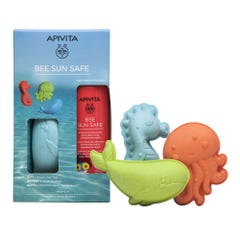 Apivita
Apivita Bee Sun Safe Children’s SPF30 set & beach toys 200 ml
A useful Giftbox for high levels of Suncare protection for Children.
(0)€14.90€74.50/l -
Made in France
 Avène
AvèneAvène Sun Children SPF50+ Spray 400 ml
Children's SPF50 + Sun Spray by Avene lastingly protects their sensitive skin against UV rays.
(27)€23.89€59.72/l -
 Korres
Korres Yoghurt Sunscreens CHILDREN Face & Body Cream SPF50 150ml
Suncare Comfort Spray for Children SPF50 offers high protection against UVA and UVB rays, specially formulated for children's sensitive skin. Enriched with yoghurt, Panthenol and Coconut and Almond oils, it provides long-lasting hydration, protection and rapid absorption with no white marks.(2)€19.90€132.67/l -
 Mustela
Mustela High Protection SPF50+ lotion 40ml
Mustela Suncare Milk SPF 50+ protects sensitive, sun-intolerant and atopy-prone skin from UVA and UVB rays.(299)€10.00 -
 Mustela
Mustela Very High Protection Sun Lotion SPF50+ 100ml
Made from avocado Perseose, Mustela SPF50+ Sun Lotion protects your skin from a wide spectrum of UV rays.
(301)€13.00Out of stock

Reviews
- y_2026, m_10, d_7, h_11
- bvseo_bulk, prod_bvrr, vn_bulk_3.0.48
- cp_1, bvpage1
- co_hasreviews, tv_0, tr_38
- loc_en_GB, sid_70267, prod, sort_[SortEntry(order=SUBMISSION_TIME, direction=DESCENDING)]
- clientName_easyparapharmacie
- bvseo_sdk, p_sdk, 3.2.1
- CLOUD, getReviews, 13.27ms
- REVIEWS, PRODUCT
Got a question?
- bvseo_sdk, p_sdk, 3.2.1
- CLOUD, getContent, 96.86ms
- QUESTIONS, PRODUCT
- bvseo-msg: HTTP status code of 404 was returned;
