Buying guide: How to choose the right face scrub for your skin type
How to choose the right face scrub for your skin type?
An effective skincare routine isn't complete without a good face scrub. Often overlooked, this essential step helps to remove dead skin cells, restore your skin’s natural glow, and boost the absorption of the treatments that follow. Whether your skin is sensitive, combination or mature, it's important to choose a face exfoliator that meets your skin’s specific needs — without damaging the skin barrier.
With so many exfoliating options available — from mechanical scrubs to enzyme-based formulas and peeling treatments — it can be hard to know where to start. Which ingredients should you look for? How often should you exfoliate? Is there such a thing as the best anti-ageing face scrub? This guide offers practical advice to help you find the right exfoliator to suit your skincare routine — and your skin type.
What is a face scrub and why should you use one regularly?
A must-have step in your skincare routine
Using a face scrub is an essential part of keeping your skin clear, smooth and radiant. It helps remove the dead skin cells that can dull your complexion and clog pores. This simple yet effective beauty step refines skin texture and preps your skin to better absorb moisturisers and nourishing treatments.
A visible boost to your skin’s radiance
By clearing away impurities, exfoliating helps to bring back your skin’s natural glow. It supports healthy cell renewal and visibly evens out the complexion. When used regularly, a face scrub leaves your skin looking fresh and smooth — without disrupting the skin barrier — and enhances the performance of your daily skincare products.
A treatment for every skin type
From gentle exfoliators for sensitive skin to purifying formulas for combination skin, or scrubs enriched with natural active ingredients for a more sensorial experience — there's something for every skin type. Choosing the right face scrub means respecting your skin’s unique needs while restoring comfort and radiance.
How does a face exfoliator work?
The basics of skin exfoliation
A face exfoliator works by helping to remove the dead skin cells that naturally build up on the surface of the skin. This is a normal part of the skin’s renewal cycle, but it can slow down over time, leading to a duller-looking complexion. Exfoliation acts as a cosmetic treatment that smooths the skin’s surface and visibly improves its appearance, while maintaining the skin’s natural balance.
Different actions depending on the formula
Depending on its formulation, a face exfoliator can work in different ways. Mechanical scrubs use fine particles to exfoliate through gentle massage, while enzyme-based or peeling exfoliators rely on active ingredients that dissolve dead skin cells without the use of grains. Each type of exfoliation offers a unique experience, so it’s important to choose one that suits your skin’s needs and comfort.
Skin that’s more receptive to treatments
By clearing away surface impurities, exfoliation helps your skin absorb the treatments you apply afterwards more effectively. Serums, moisturisers or masks can penetrate more easily into freshly exfoliated skin, maximising their benefits. When used correctly, a face exfoliator fits naturally into a balanced skincare routine.
What are the different types of face exfoliators?
Type of exfoliator
How it works
Best for
Benefits
Mechanical scrub
Contains fine natural grains (e.g. sugar, rice powder, crushed shells)
Made with fruit enzymes (like papaya or pineapple) that gently “digest” dead skin cells
Sensitive, reactive or thin skin
Gently exfoliates without grains or rubbing, ideal for skin that doesn’t tolerate scrubs well
Chemical exfoliator / peel
Uses mild acids (AHA, BHA, PHA) to boost cell turnover
Dull skin, mature skin, or skin prone to irregular texture
Promotes a more even complexion and visibly smoother skin, no physical scrubbing
Combined exfoliator
Combines mechanical exfoliation (grains) with enzymes or mild acids
Skin used to exfoliation, non-sensitive
Offers a complete exfoliation for clearer, more radiant skin
Natural / organic exfoliator
Certified formulas, fragrance-free and free from controversial ingredients
All skin types, depending on formulation
Respects both skin and the environment, often with gentle textures and pleasant sensorial feel
Which exfoliator is right for your skin type?
Sensitive skin
Sensitive skin needs extra care. It reacts easily to friction and overly active ingredients. For this skin type, it’s best to choose a grain-free face exfoliator, such as an enzyme exfoliator, which gently removes dead cells without irritating the skin. Fragrance-free formulas with fruit enzymes or soothing ingredients like aloe vera are especially suitable. This kind of exfoliant helps maintain skin comfort while enhancing your natural glow.
Dry skin
Dry skin often feels rough and lacks radiance. A gentle scrub enriched with moisturising ingredients such as sweet almond oil or shea butter can help smooth the skin and support its natural barrier. Avoid abrasive grains and go for a creamy texture to prevent tightness or discomfort after use.
Combination skin
Combination skin tends to have an oilier T-zone and drier or normal cheeks. A balanced exfoliator works best here. Face scrubs with white clay or charcoal help purify shine-prone areas while respecting drier zones. A gentle exfoliant, used once or twice a week, helps even out the complexion and refine skin texture.
Oily skin
Oily skin is often prone to excess sebum, enlarged pores and uneven texture. A purifying exfoliator with active ingredients like zinc, charcoal, or gentle acids (such as AHAs or BHAs) can help unclog pores and reduce shine. It’s important to choose a non-comedogenic formula and avoid over-exfoliating, as this can stimulate more oil production.
Mature skin
As we age, cell turnover naturally slows down, and the skin can become thinner and duller. An anti-ageing exfoliator with AHAs (like glycolic or lactic acid) can help improve radiance and visibly smooth uneven texture. These gentle, often grain-free formulas exfoliate effectively without irritating the skin. Regular exfoliation also helps boost the effectiveness of your anti-ageing treatments.
Normal skin
Balanced and generally well-tolerated, normal skin can benefit from various types of exfoliators. A mild scrub with fine grains or a light enzyme exfoliator can help maintain the skin’s natural glow. The key is to stay in tune with how your skin reacts and adjust how often you exfoliate. Once or twice a week is usually enough to keep your skin soft and radiant.
Which ingredients should you look for in a face exfoliator?
Some ingredients are especially appreciated in face scrubs for their gentle exfoliating action and their ability to visibly improve skin texture. Here’s a selection of commonly used actives and their main cosmetic benefits:
Ingredient
Type of action
Cosmetic benefits
AHAs (glycolic, lactic acid)
Gentle chemical exfoliation
Helps smooth skin texture and even out the complexio,
Fruit enzymes (papaya, pineapple)
Natural enzymatic exfoliation
Gently removes dead skin cells – ideal for sensitive skin
Charcoal
Absorbs impurities and excess sebum
Purifies the skin and helps reduce shine
White clay
Gentle mineral exfoliant + purifying
Smooths the skin without irritating the epidermis
Salicylic acid (BHA)
Oil-soluble chemical exfoliant
Helps unclog pores and smooth the skin
Vitamin C
Antioxidant – glow booster
Brightens dull skin and revives radiance
Aloe vera
Soothing and hydrating
Helps maintain skin comfort after exfoliation
Natural grains (sugar, rice powder)
Gentle mechanical exfoliation
Offers a pleasant exfoliating massage – suitable for non-sensitive skin
Sweet almond oil, shea butter
Nourishing agents
Softens the skin and helps prevent post-scrub tightness
Which ingredients should you avoid in a face exfoliator?
Some ingredients, although effective in other types of skincare, can be too harsh or poorly tolerated in facial scrubs — especially for sensitive or reactive skin. Here’s a list of exfoliating agents or components best avoided, along with gentler alternatives:
Ingredient
Why avoid it?
Recommended alternative
Plastic microbeads
Harmful to the environment, banned in rinse-off products
Natural exfoliating grains (e.g. sugar, micronised fruit pits)
Harsh grains (e.g. non-micronised shells, salt)
Too abrasive – can cause micro-tears and irritation
Enzyme exfoliators or scrubs with ultra-fine grains
Denatured alcohol (alcohol denat.)
Can dry out and weaken the skin barrier
Aloe vera, floral waters (hydrosols)
Excess fragrance
May cause irritation or sensitivity, especially on fragile skin
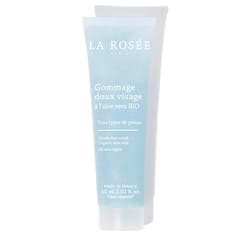
Made with Bioes Aloe Vera, this gentle facial scrub is the ideal preparation for moisturising your skin.
(8)
€14.90
How often should you exfoliate your face?
Once or twice a week for normal to combination skin
If your skin isn’t particularly sensitive, exfoliating once or twice a week helps maintain a smooth texture, refine pores and boost your natural glow. This regular rhythm also improves the absorption of your skincare products, while respecting the skin’s natural balance.
Every 10 to 15 days for sensitive or dry skin
Fragile skin types need more time between exfoliations to avoid redness or discomfort. A gentle, grain-free exfoliator every 10 to 15 days can help maintain skin comfort while evening out the complexion over time.
Adapt frequency to your skin’s needs
Your skin changes with the seasons, your environment and even hormonal shifts — so your exfoliation routine should too. In winter, exfoliate less often to prevent dryness; in summer, you might need it more regularly to help manage excess oil. The key is to listen to your skin and avoid over-stimulating it.
Tips to get the most out of your exfoliator
Always exfoliate on clean skin
Before applying a face exfoliator, make sure your skin is properly cleansed with a gentle product. This removes surface impurities like excess sebum, pollution or makeup, and allows your exfoliator to work more effectively. Clean, slightly damp skin also helps the product spread more easily and reduces friction.
Massage gently — don’t scrub
Whether you’re using a mechanical or enzymatic exfoliator, apply it with light circular motions. There’s no need to press or rub, especially on delicate areas like the cheeks or around the lips. The goal is to stimulate the skin, not strip it.
Follow with a moisturising treatment
After exfoliating, your skin is more receptive to skincare. That’s the perfect time to apply a hydrating cream or soothing serum to help restore the skin’s moisture barrier and boost comfort. This step also helps to prolong the benefits of exfoliation and keep your skin balanced.
What should you do after exfoliating your face?
Soothe your skin with a suitable treatment
After exfoliating, your skin may feel slightly more sensitive. It’s a good idea to apply a hydrating or soothing product straight away, such as a cream enriched with gentle ingredients like aloe vera, hyaluronic acid or floral waters. This helps restore comfort and strengthen the skin’s natural protective barrier.
Avoid direct sun exposure
Post-exfoliation, your skin becomes temporarily more vulnerable to external factors — especially UV rays. It’s best to avoid direct sunlight for a few hours after exfoliating. During the day, using broad-spectrum sun protection is highly recommended to protect your skin and maintain its healthy glow.
Don’t overload your skin with active ingredients
In the hours following exfoliation, it’s best to avoid applying strong active ingredients like retinol, concentrated acids or essential oils. Your skin needs time to recover. A minimalist and gentle routine will allow you to get the most benefit from your exfoliator without disrupting your skin’s natural balance.
Your shortcut to self-care!
Sign up for our free newsletter and unlock early access to offers, expert tips and product drops — just for subscribers.
Please confirm your subscription. A confirmation e-mail will be sent to the address indicated.
First Name
Email
The data transmitted via this form is processed by EASYPARAPHARMACIE ("EASYPARA") in its capacity of a data controller, for the purpose of managing your EASYPARA account. Your data may also be used, subject to your express consent, for you to receive personalised commercial information by e-mail relating to the activities and products marketed by EASYPARA. You have the right to file a complaint with the competent supervisory authority, to define requirements concerning the conservation, deletion and communication of your data after your death, as well as a right of access, rectification, deletion, limitation, portability and opposition on legitimate grounds of personal data related to you. To exercise any of these rights, please send your request by e-mail to the following address: donneespersonnelles@easyparapharmacie.com or by post to: EASYPARA - Data Protection Officer - Protection des données personnelles - 47 Boulevard René Cassin - 06200 Nice - FRANCE. For more information on processing of your personal data, please consult our EASYPARA personal data processing policy.